Almost all businesses are leveraging social media platforms for marketing their products and services. According to a research article, social media plays a crucial role in influencing the buying decisions of consumers. There are many social media platforms, but Instagram is one of the most popular ones. Instagram has created the space for brands to tell their story and engage with their audience. It’s now easier than ever to reach out to customers.
But the key to Instagram’s success is to use it for more than just taking pictures of your food. If you’re just taking pictures to showcase your meal, you’re missing the point. It’s about a lot more than food on Instagram.
If you want your food and drink business to grow, then you need to stop thinking like a food blogger and start thinking like a business owner. Instagram helps businesses grow by reaching their customers, providing them with great experiences and increasing their brand awareness.
In this article, we will give you 5 solid tips to grow your food business on Instagram by spending a minimum amount and getting a higher ROI.
1. Create High-Quality Food Content
The first step in Instagram marketing for a food business is to show people what you sell.
Customers want to see the actual food before they decide whether to visit your restaurant or place an order. Good photographs can make a dish more appealing, while short videos can show its texture, preparation and presentation.
You do not necessarily need an expensive camera. A modern smartphone, natural lighting and a clean background can produce good results.
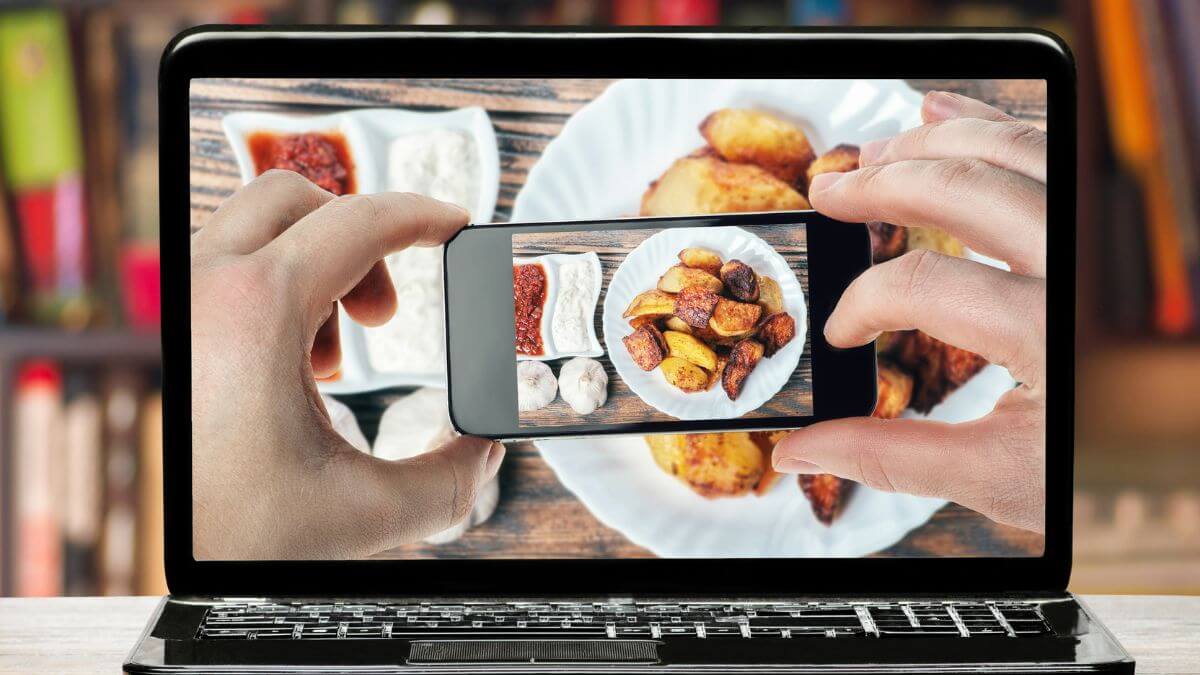
Try different types of food content, such as:
- Close-up photographs of popular dishes
- Short videos showing food preparation
- Behind-the-scenes kitchen clips
- Before-and-after plating videos
- Chef demonstrations
- New menu announcements
- Customer reactions, with permission
- Videos showing how a signature dish is prepared
Reels deserve particular attention because short-form video can help food businesses reach people beyond their existing followers. Current restaurant marketing guides also recommend using preparation videos, staff content and behind-the-scenes footage instead of relying entirely on polished food photographs.
Think about what would make someone stop scrolling. A video of cheese stretching from a freshly prepared pizza, a chef preparing a signature curry or a close-up of a dessert being served can communicate much more than a generic promotional post.
2. Use Instagram Stories to Stay Connected
Regular posts can introduce your food business to potential customers, but Instagram Stories can help maintain a relationship with people who already follow you.
Stories are temporary posts that normally disappear after 24 hours. This makes them useful for sharing timely information without filling your main profile with promotional updates.
For example, a restaurant can use Stories to show:
- Today’s special
- Freshly prepared dishes
- Limited-time offers
- Behind-the-scenes activities
- Customer visits
- Polls and questions
- New menu items
- Last-minute availability
- Staff introductions
- Events and celebrations
You can also use Stories to encourage interaction. Ask followers which dish they prefer, let them vote on a new menu item or ask what they would like to see next.
This approach gives followers a reason to return to your profile. It also helps a food business understand what its audience actually likes.
Do not make every Story a sales message. A profile that constantly asks people to buy something can become repetitive. Mix promotional content with useful, entertaining and human content.
3. Tag Customers, Locations and Relevant Accounts
Instagram marketing becomes more effective when your content connects with the people and places around your business.
If a customer visits your restaurant and agrees to appear in a photograph or video, you can tag them when appropriate. You can also encourage customers to tag your business when they share their own experiences.
User-generated content can provide valuable social proof because potential customers can see real people enjoying your products.
Location information also matters for local food businesses. A restaurant in Delhi, for example, should make it clear that the business serves customers in Delhi rather than relying only on broad food-related hashtags.
Use relevant location information in your posts and profile, including your neighbourhood or city where appropriate.
You can also collaborate with:
- Local food creators
- Nearby businesses
- Event organisers
- Local communities
- Suppliers
- Chefs
- Customers
Choose collaborators based on audience relevance rather than follower count alone. A food creator with 10,000 followers who lives near your restaurant may provide more useful exposure than a much larger account whose audience lives hundreds of kilometres away.
The goal is not simply to collect tags. The goal is to put your food business in front of people who can realistically become customers.
Also Read: Do people get notified on Instagram if I take a screenshot?
4. Use Relevant Hashtags and Keywords
Hashtags can help Instagram understand the subject of your content, but using dozens of generic hashtags does not guarantee better reach.
Instead, use hashtags that describe your food, business and location.
For example, a bakery in Chandigarh might use combinations related to:
- Chandigarh food
- Chandigarh bakery
- Chandigarh cafés
- Fresh cakes
- Custom cakes
- Birthday cakes
- Local desserts
Avoid adding unrelated popular hashtags simply because they have a large audience.
Your captions should also contain natural keywords that describe what you offer. If you sell vegetarian pizza in Ludhiana, for example, mention the product and location naturally instead of writing a caption filled with unrelated hashtags.
This can make your content clearer to both users and platform search systems.
Your Instagram profile should also clearly state:
- What your business sells
- Where you operate
- Your speciality
- How customers can contact you
- Where customers can order or book
A potential customer should not have to search through several posts to discover where your restaurant is located or how to place an order.
5. Engage with your followers
Posting content is only one part of Instagram marketing. You also need to interact with people who respond to it.
Reply to genuine comments and questions. Respond to relevant direct messages. Thank customers when they share your food. Repost suitable customer content when you have permission.
You can also use questions and polls to start conversations.
For example, instead of simply posting a picture of two desserts, ask:
“Which one would you choose: chocolate brownie or cheesecake?”
A simple question can encourage people to interact with the post and gives your business information about customer preferences.
You should also monitor which posts generate meaningful actions. Do people save your recipe videos? Do customers send your Reels to friends? Do profile visits increase after you publish a new dish?
These signals can help you decide which content deserves more attention.
How Often Should a Food Business Post on Instagram?
There is no single posting frequency that works for every food business. Consistency matters more than publishing a large number of low-quality posts.
A small restaurant could start with a manageable weekly schedule:
- 2 Reels: food preparation, dishes or behind-the-scenes content
- 1–2 photo or carousel posts: menu items, customers or useful information
- Several Stories: daily specials, updates, customer content and offers
- 1 promotional post: a specific offer or event when relevant
Current restaurant-focused marketing guidance also recommends mixing food content with people, offers and behind-the-scenes material rather than publishing the same type of food photograph repeatedly.
The exact schedule should depend on your staff, resources and audience.
Conclusion
Growing a food business on Instagram does not require every post to go viral. A better approach is to consistently show appealing food, demonstrate the people behind the business, interact with local customers and make it easy for interested viewers to take action.
Start with high-quality food content, use Stories to maintain regular contact, tag relevant people and locations, use specific hashtags and keywords, and respond to your audience.
Most importantly, measure whether your Instagram activity is helping your business receive enquiries, orders, bookings or visits. A smaller but relevant local audience can be more valuable than thousands of followers who will never become customers.