Task Manager is an essential component in the monitoring of system performance, the management of running applications, and the diagnosis of unresponsive applications. If the task manager refuses to open, the user will no longer be able to view CPU, memory, disk, and background process information directly. Microsoft support information indicates that common causes of problems related to the functionalities of system utilities, such as the task manager, are configuration issues, corrupted system files, or external interference by third-party software. Why would a diagnostic component stop working when the overall system is working properly?
In this article, we shall discuss the best ways to resolve the issue of Task Manager not opening on Windows 10 and Windows 11.
Common Reasons the Task Manager Does Not Open
Before applying fixes, understanding the underlying causes improves accuracy and reduces trial-and-error. Task Manager issues usually fall into one of these categories:
- Group Policy or Registry restrictions applied intentionally or accidentally
- Malware or unwanted programs are blocking system utilities
- Corrupted Windows system files
- Explorer or user profile malfunctions
- Conflicts after Windows updates or third-party software installations
Identifying symptoms helps narrow down the solution. Does Task Manager fail silently? Does an error message appear? Does the system freeze briefly and return to normal? Each behaviour signals a different root cause.
Try Keyboard Shortcuts and Alternate Access Methods
Sometimes the problem lies with a specific access method rather than the Task Manager itself.
Start with these alternatives:
- Press Ctrl + Shift + Esc directly
- Press Ctrl + Alt + Delete, then select Task Manager
- Press Windows + R, type
taskmgr, and press Enter - Right-click the Start menu and select Task Manager
If one method works while others fail, the issue likely relates to Explorer or shortcut associations rather than system restrictions. Consistent failure across all methods indicates a deeper configuration or file-level problem.
Restart Windows Explorer
Windows Explorer manages the desktop environment, Start menu, and taskbar. A malfunctioning Explorer process can prevent Task Manager from launching.
Follow these steps:
- Press Ctrl + Alt + Delete
- Select Sign out, then log back in
- Try opening Task Manager again
If sign-out resolves the issue, Explorer instability caused the failure. Systems running continuously for several days often encounter this scenario due to memory fragmentation or hung shell extensions.
Check If Task Manager Is Disabled by Policy
On many systems, especially shared or previously managed machines, Task Manager gets disabled through Group Policy.
Method 1: Using Group Policy Editor (Pro and Enterprise Editions)
- Press Windows + R, type
gpedit.msc, press Enter - Navigate to:
User Configuration → Administrative Templates → System → Ctrl+Alt+Del Options - Double-click Remove Task Manager
- Set it to Not Configured or Disabled
- Apply changes and restart the system
Method 2: Using Registry Editor (All Editions)
- Press Windows + R, type
regedit, press Enter - Navigate to:
HKEY_CURRENT_USER\Software\Microsoft\Windows\CurrentVersion\Policies\System - Locate DisableTaskMgr
- Set its value to 0 or delete the entry
- Restart Windows
Policy restrictions account for a large percentage of Task Manager issues reported on pre-owned or corporate devices.
Scan for Malware and Unwanted Programs
Malware frequently disables Task Manager to avoid detection. Cybersecurity studies indicate that over 30% of consumer malware strains attempt to block system monitoring tools.
Run a full system scan using:
- Windows Security (Microsoft Defender)
- A reputable third-party antivirus solution
Avoid running multiple real-time antivirus programs simultaneously, as conflicts may worsen system instability. After removing threats, restart the system and attempt to open Task Manager again.
Use DISM to Repair Windows Image
If SFC fails or reports unfixable errors, Deployment Image Servicing and Management (DISM) provides a deeper repair.
Run these commands in an elevated Command Prompt:
DISM /Online /Cleanup-Image /CheckHealth
DISM /Online /Cleanup-Image /ScanHealth
DISM /Online /Cleanup-Image /RestoreHealth
Once completed, restart the system and re-run sfc /scannow. This combination addresses both image-level and file-level corruption.
Check User Account Integrity
A corrupted user profile can block access to system tools while the rest of Windows appears functional.
Test by creating a new user account:
- Open Settings → Accounts → Other users
- Create a new local or Microsoft account
- Sign in to the new account
- Try opening Task Manager
If Task Manager works in the new profile, the original account contains corrupted user settings. Migrating data to a new profile becomes the safest long-term fix.
Update Windows and Drivers
Outdated system components may trigger compatibility issues, particularly after feature updates.
Check for updates:
- Open Settings → Windows Update
- Install all pending updates
- Restart the system
Also, update the chipset and graphics drivers from the device manufacturer. Driver conflicts, especially GPU driver issues, occasionally block system UI processes that Task Manager depends on.
Now, try to run the Task Manager after restarting the computer.
Search for software Online
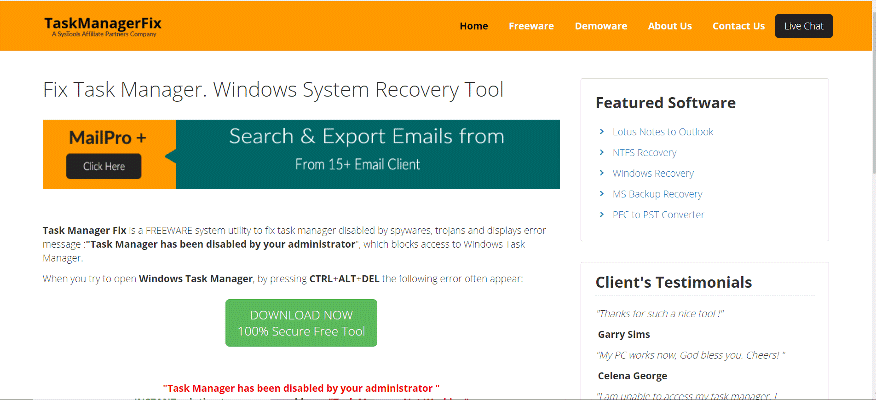
At this stage, you need to get some software that can fix this issue; try searching for good software online. You can also go with this software :
Conclusion
Final Thoughts
Task Manager not opening on Windows rarely signals a hardware failure. In most cases, configuration restrictions, corrupted system files, or third-party interference cause the problem. By following a structured troubleshooting sequence—starting with access methods and moving toward deeper repairs—users can restore Task Manager functionality with minimal disruption. When system tools regain reliability, overall performance monitoring and problem resolution become significantly easier.